





Written by Dr. K N Priya, Assistant professor at IIHMR Bangalore
The imperative for Sustainable Hospital
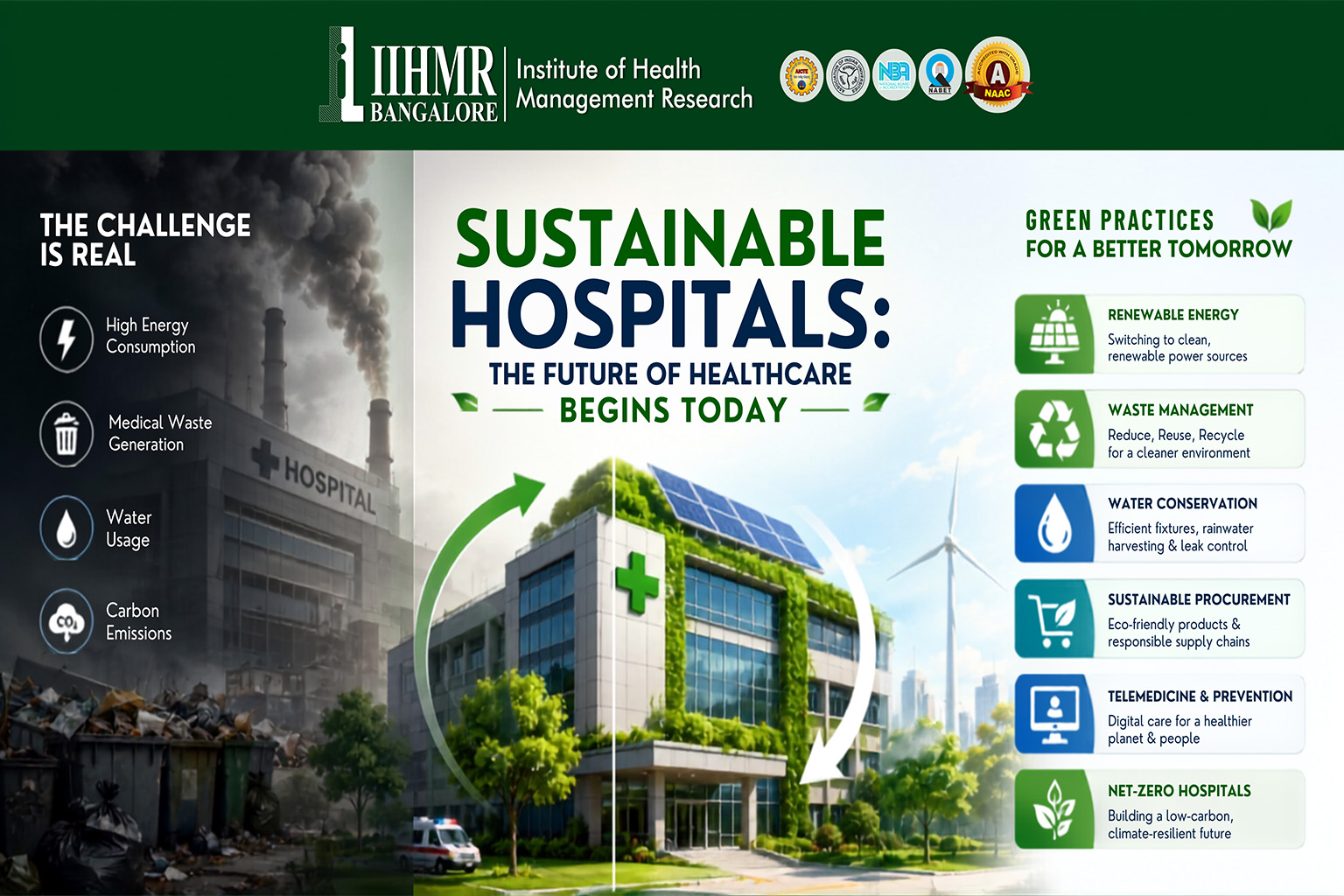
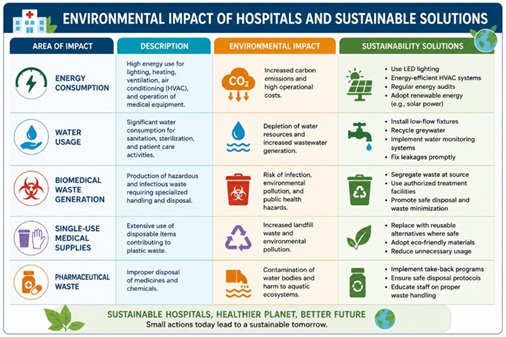
Hospital sustainability is now an essential component of contemporary healthcare administration rather than a specialized issue. Hospitals are major resource consumers and trash producers even though they are vital to public health. The environmental impact of healthcare is significant, ranging from the use of energy and water to the enormous quantities of waste products. Healthcare has a huge impact on the environment, from the massive amounts of waste products to the consumption of energy and water.
Key areas of Focus for Sustainable Hospitals
Energy Efficiency:
- Renewable Energy sources: Switching to solar, wind, or geothermal power to lessen dependency on fossil fuels
- Energy-Efficient Building Design:Better insulation, LED lighting, and smart thermostats
- Optimized HVAC Systems: Upgrading and maintaining heating, ventilation, and air conditioning systems on a regular basis for maximum efficiency
- Behavioral Changes: Teaching employees’ energy-saving techniques, like shutting off lights and equipment when not in use
Waste Management and Reduction:
- Reduce, Reuse, Recycle: Putting in place thorough recycling programs for paper, plastic, glass, and metals; investigating reusable medical supplies when appropriate and safe;
- Trash Segregation: Clearly outlining and implementing procedures to separate general, infectious, and hazardous trash.
- Composting: Using composting operations to keep organic waste out of landfills.
Water Conservation:
- Efficient fixtures:Installing showerheads, toilets, and low-flow faucets.
- Water-Wise Landscaping: Using drought-tolerant plants and effective irrigation systems
- Rainwater Harvesting: Gathering and reusing rainwater for non-potable uses
- Leak Detection and Repair: Proactively monitoring and quickly repairing water leaks
Sustainability Procurement and supply chains:
- Green Purchasing Policy: Making it a priority to buy eco-friendly goods
- Reducing Single-Use Items: Reducing the usage of single-use items when safer substitutes are available.
- Local Sourcing: Assisting regional vendors to lower transportation-related emissions and strengthen the local economy.
- Life Cycle Assessment: To promote sustainable procurement choices and lessen the total environmental impact of healthcare facilities, items and services are evaluated for their environmental impact at every stage of their life cycle, from sourcing and manufacture to usage, waste, and recycling.
The Benefits of Sustainable Healthcare
Environmental Protection:
Lower greenhouse gas emissions, less pollution, and conservation of natural resources
Cost Savings:
Lower utility bills (water and energy), lower waste disposal costs, and effective resource management can result in significant financial savings
Improved Patient and Staff Health:
Better indoor environments, less exposure to toxins, and access to fresh, locally sourced food contribute to well-being
Enhanced Reputation and Community Relations:
Showing a commitment to sustainability can improve public opinion and draw in environmentally conscious patients and staff.
Challenges and the Path Forward
Some of the biggest barriers to sustainability in hospitals are high initial investment costs for renewable energy and infrastructure, as well as severe restrictions that limit material reuse. Staff members’ ignorance and inadequate training may also impede effective adoption. Organizational resistance to change further impedes progress, and insufficient data systems make it difficult to measure and monitor sustainability performance.
Next Steps
The key components of sustainable hospitals in the future will include net-zero energy systems, increased use of biodegradable materials, integration of sustainability into certification standards, expansion of telemedicine, and a stronger focus on preventative healthcare. In general, creativity and collaboration will play a major role in sustainable transformation.