




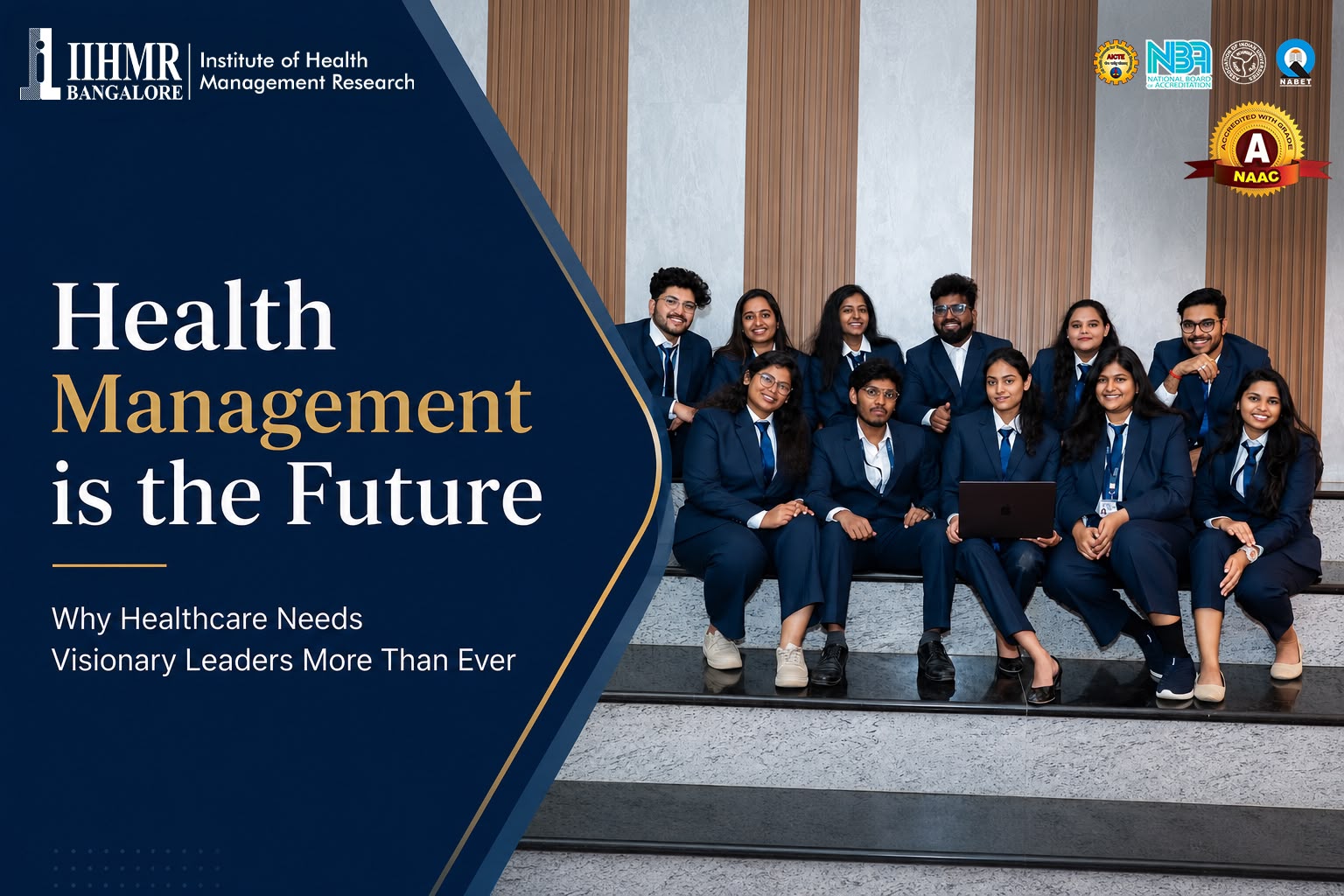
Written by Mr. Gowthamghosh B, Assistant – Professor at IIHMR Bangalore
Health Management
Health Management, also known as Public Health Management, is a discipline of planning, organizing, managing, and evaluating healthcare programs to improve population health. It focuses on ensuring efficient use of healthcare resources, strengthening health systems, and delivering quality healthcare through combined community efforts. The National Health Policy (2017) of India recognized the need for a dedicated multidisciplinary public health workforce, leading to the establishment of the Public Health Management Cadre (PHMC) in 2022. This cadre separates administrative responsibilities from clinical duties, enabling doctors to focus on patient care while the trained managers will address the planning, implementation, monitoring, and evaluation of healthcare programs.
The Expert Committee on Enhancing Resource Investment in Health (ECERIH) constituted by the Economic Advisory Council to Prime Minister highlighted that the country would require 77-80 health workers per 10,000 population to deliver the essential healthcare services. The Health Management cadre support in delivering the national health programs at grassroot level.
Health management professionals work across diverse settings including public sector health departments at national, state, district, and block levels, private hospitals and healthcare facilities, NGOs, international organizations like WHO,UNICEF, BMGF, PATH etc., pharmaceutical companies, health insurance companies, academic and research institutions, and corporate social responsibility programs.
Roles and Responsibilities
The health management professionals perform diverse leadership and managerial functions across public healthcare organizations; these functions are critical to health care delivery. The key responsibilities include strategic planning, program implementation, financial and human resource management, quality assurance, regulatory & ethical compliance, supply chain management, procurement, health information management systems (HMIS), disease surveillance, monitoring and evaluation, and coordination among healthcare stakeholders.
Essential Skills
The Public Health Foundation has identified that the health managers require multidisciplinary competencies, including policy development, program planning, data analysis, communication, health equity skills, leadership, financial management, health informatics, people skills (community engagement, leadership, stakeholder management) and systems thinking. The health manager should possess strong problem-solving, teamwork, networking, and technological skills. Also, proficiency in artificial intelligence (AI), digital health, health data analytics and evidence-based policy is becoming essential.
Drivers of Demand
India’s demand for health management professionals is growing rapidly due to population growth, ageing, increasing burden of communicable and non-communicable diseases, healthcare infrastructure expansion, digital transformation, and government health reforms. The COVID-19 pandemic highlighted the need of trained managers and strong health system.
The healthcare industry is projected to exceed US$500 billion by 2030, creating significant employment opportunities. A substantial shortage of trained health managers exists, with workforce requirements expected to reach nearly 45,000 professionals by 2030. The Government of India and other state government initiatives including PHMC, Ayushman Bharat, PM-JAY, the National Digital Health Mission, and expanding medical tourism further creating employment opportunities for health management professionals.
Major Fields and Career Opportunities
The health management encompasses public health, hospital administration, epidemiology, health policy, health economics, biostatistics, environmental health, nutrition, health informatics, healthcare finance, insurance management, pharmaceutical management, healthcare quality, digital health, and healthcare consultancy.
For health management professionals the career opportunities exist in government health departments, NITI Aayog-Young Professional, hospitals, health insurance companies, pharmaceutical firms, consulting organizations like IQVIA, KPMG, PwC, Boston Consulting Group, John Snow Inc, Deloitte, NGOs, international agencies such as WHO and UNICEF, research institutions like ICMR, academic organizations like IIHMR,PHFI, healthcare startups, telemedicine companies, and corporate health programs.
The common positions include Health Program Manager, Public Health Manager, Healthcare Consultant, Epidemiologist, Health Policy Analyst, Health Informatics Manager, Monitoring, Evaluation and Learning expert and Public Health Researcher.
Future Outlook
The Public Health management professionals entering the field today will witness and lead the transformation, making it one of the most dynamic and impactful career choices in India. The sector offers not only substantial financial rewards but also the opportunity to make meaningful contributions to improving population health. As India strengthens its healthcare system and moves toward Universal Health Coverage, health management professionals will play an increasingly strategic role in improving health outcomes, enhancing system efficiency and leading healthcare innovation both nationally and globally.
At the Institute of Healthcare Management Research (IIHMR), Bangalore, our specialized health management program is designed to transform the foundational knowledge into advanced executive skills.